


Electric Heating
Electric Heating
The colder it is outside, the more energy it takes to heat your home. During the winter months, lower temperatures mean your heating system works harder, turning on more often, and using more energy, including electricity, to keep your home comfortable.
Learn how winter temperatures affect your electricity use and explore tips and resources to help you stay warm while managing costs.



How Temperature Affects Electricity Use
In Nova Scotia, about 60% of a homes’ annual energy use goes toward heating. During the winter months, that share climbs even higher, driving costs up by more than 70%.
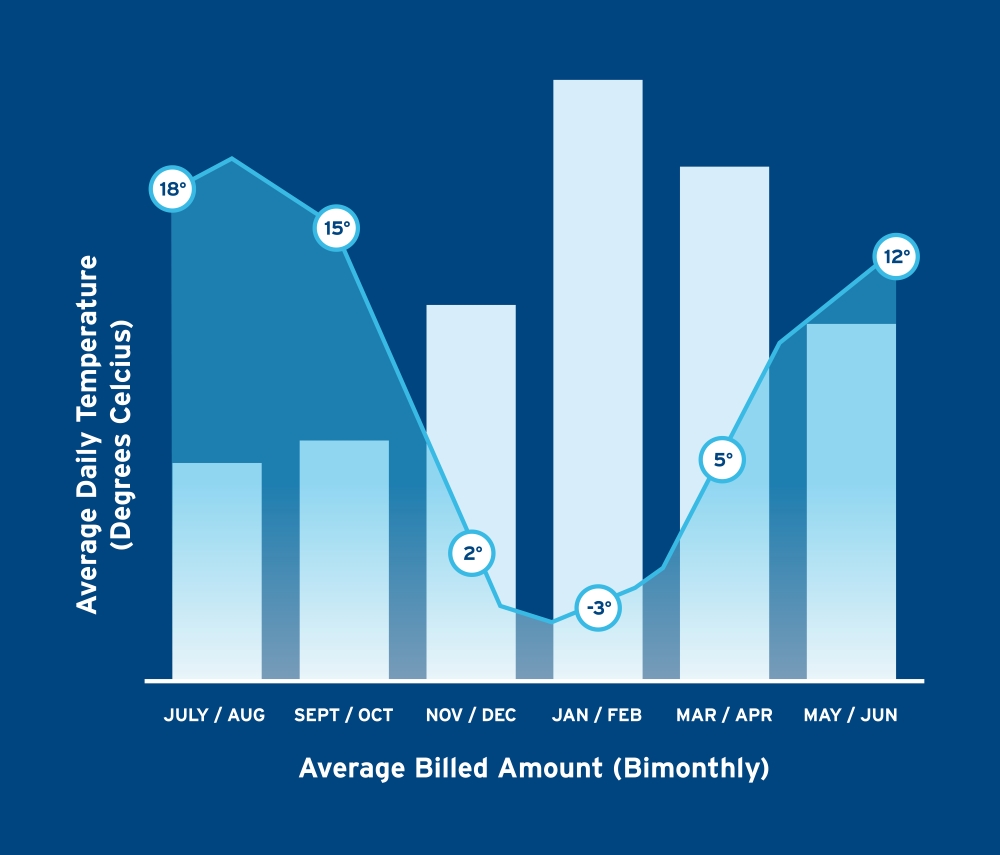
The below graph shows how your electricity use changes throughout the year and how cold weather impacts your bill. As the temperature line drops during the winter months, you’ll see billed amounts rise. This happens because colder weather means your heating system runs more often and uses more electricity.
Understanding Heating Degree-Days
Heating degree-days show how often the average outdoor temperature is lower than 18 °C, which is when most homes start using heat.
Heating degree-days help explain why energy use and bills can change from one winter to the next, or from one month to the next, even when nothing changes inside your home. Simply put, the more heating a home needs, the more electricity it uses, and the higher the bill will be.
Tips to Maximize Comfort and Minimize Costs
Small changes can make a difference. Here are some practical ways to manage your electric heating during the winter.
Thermostat Temperature Settings
Even when you’re not home, your heating system still uses electricity to maintain the temperature you set. Lowering your heat a few degrees overnight or during long periods of time can reduce electricity use.
Here are some common thermostat settings to keep you comfortable:
- 21°C (7T0°F) when relaxing at home
- 18°C (64°F) when sleeping
- 16°C (61°F) when no one is home
Did you know that turning up the thermostat can cost more? For every degree above 21°C you keep your home, your electricity costs increase by about 2 to 2.5%.
Heat Pump Specific Thermostat Settings
Some programmable thermostats designed for heat pumps can anticipate temperature changes without relying on more expensive backup heat. If you lower your heat pump’s temperature, keep the backup system set at least 3°C lower.
Example: if your heat pump is normally set to 20°C and you lower it to 17°C overnight, set your backup system no higher than 14°C.
Heat Recovery Ventilators
There is a significant difference between air exchangers and heat recovery ventilators (HRV) in terms of comfort and operating costs. Air exchangers circulate the air around your home. An HRV preheats incoming fresh air, so it reduces your heating costs.
Depending on the size of your home, a heat recovery ventilator that can recover 80 percent of the heat from outgoing air can save $150 to $450 in heating costs compared to an air exchanger with no heat recovery.
You can learn more about HRVs here
Uninsulated Spaces
Uninsulated basements and garages can cause heat loss, cold floors, and drafts. Insulating these areas helps keep warmth where you need it and lowers costs.
Thermostats in uninsulated basements or garages should have an “off” setting so you only heat those spaces when needed. If a thermostat has no off mode, its minimum setting will activate the heater whenever the temperature drops below that point.
Sealing and Caulking
Air leaks can waste energy. The basement sill plate (the area between your concrete foundation and the walls above) is the biggest source of leakage, and electrical outlets on exterior walls account for another 20%.
Using foam gaskets and caulking to keep heated warm air inside and reduce heating costs.
EFFICIENCY NOVA SCOTIA RESOURCES
Efficiency Nova Scotia is dedicated to helping homeowners and businesses save energy and money with programs designed to lower energy bills. Explore useful tips and practical advice that can help save you money from Nova Scotia’s energy efficiency leader.
 Energy Saving Tips
Your home needs attention, and the right prep work now can save you money once the cold season kicks in. Here are some improvements you can do to deliver immediate results without breaking the bank.
LEARN MORE Weatherstripping
Air leaks can be a major source of heat loss in your home, which is why sealing drafts is one of the smartest investments you can make to stay comfortable and save money this winter.
LEARN MORE Heat Pumps & Extreme Cold
As you prepare for the winter season, here’s what you need to know about caring for your heat pump during a cold snap.
LEARN MOREHave you considered equal billing?
Get a predictable monthly payment to help you budget your household expenses throughout the year.
Additional Resources
Explore these helpful resources to learn more about electric heating solutions, real customer experiences, and practical tips to stay comfortable throughout the season.

Your energy wallet
.jpg?sfvrsn=3632e390_1 "Trust_Website_Thumbnails_Customer Stories_05 (1)")
Trust, Catherine, and Jehosheba’s Heat Pump Story: A cozy, warm, welcoming home
.jpg?sfvrsn=de05ba34_1 "Dana_Website_Thumbnails_Customer Stories_08 (1)")
Dana and Dar: A cozy, energy-efficient home
.jpg?sfvrsn=b321e751_3 "NSP-22Contrast-530x305 (1)")