


Safety
Safety
Living safely is a journey for all of us. We're here to help keep you safe when you’re around electricity.



ELECTRICITY Awareness
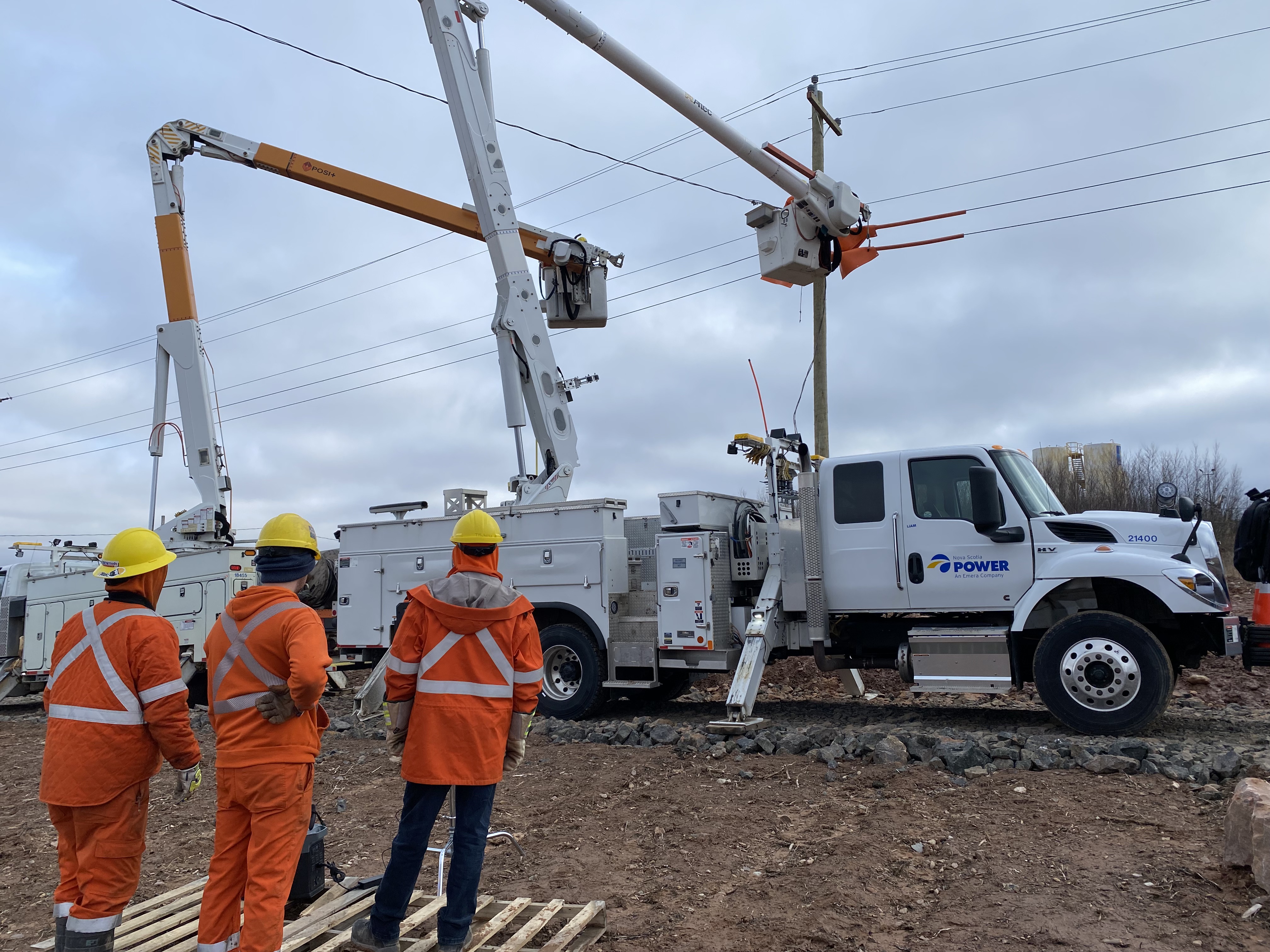
Electricity can be dangerous. Keep these electrical-safety best practices about powerlines in mind.
Downed wires
Treat downed wires as live and dangerous. If you're near a wire, shuffle (keeping both feet touching the ground) until you are at least 20 metres away from the wires and call 9-1-1.
Powerline insulation
Do not assume that power lines are insulated. The insulation can be worn through exposure to weather.
Don’t forget to look down
Some electrical equipment and power lines are underground. Before digging, contact us to get underground electrical locates.
Don’t put your life on the line
Stay away from our electrical equipment and infrastructure, including transmission towers, hydro dams, power lines, and substations. Respect all warning signs. Do not climb transmission towers or trespass on our property. Safety always comes first.
Safely connecting power
Safely connecting your power is our top priority. In preparation for your power connection, we ask that you take a few minutes to inspect your residence for any potential fire hazards. This includes any flammable material or liquid (e.g., paper, cardboard, hand sanitizer, cleaners) placed on or near stove heating elements or any appliance that will emit heat when your electricity comes back on.
It’s also a good idea to unplug sensitive appliances and equipment to avoid damage caused by potential power surges.
| Tips To Keep You Safe | Tips To Work Safely |
|---|---|
|
|


REQUEST PRESENTATION FROM OUR SAFETY TEAM
Want to schedule an electrical safety presentation for your workplace or community? Call us at 1-800-428-6230 and request a safety presentation—we’d love to hear from you.
In and Around your vehicle
Stay put, stay safe
Three tips to keep you safe in the event you encounter a downed power line:
- Driving? Stay in your vehicle and call 9-1-1. Communicate clearly to others who may approach wanting to help you—warn them to stay away from your vehicle.
- If you must exit the vehicle, jump clear with both feet together. The metal on the vehicle may be carrying the electricity from the downed power line. If you touch the metal of the vehicle and the ground at the same time, your body becomes a path for the electricity to travel and you could be electrocuted. Jumping from the vehicle with both feet ensures there is no connection between the vehicle, you, and the ground.
- Once outside the vehicle, do not touch any part of the vehicle. Move away by shuffling both feet on the ground until you are at least 20 metres away from the downed power line.
Reminder: Tires are not insulators. Contact with high voltage may damage a rubber tire. The tire could fail immediately, in 15 minutes, or after several days, depending on the damage.
If your vehicle has come in contact with a down power line:
- Do not drive the vehicle before carefully checking the tires.
- Allow tires to cool for at least one hour before examining.
- Have damaged tires inspected by a qualified tire facility.
- Inspect hydraulic equipment.
- Inspect computer equipment.
Generator Safety & Installation
Generators can be a helpful backup power source during outages, but they must be installed and operated safely. All generators must be installed by a qualified electrician. The electrician must apply for a wiring permit and have the generator inspected by a Nova Scotia Power before it is used. See a list of qualified electricians and book an appointment with a Nova Scotia Power wiring inspector.

| General Generator Safety | Carbon Monoxide Safety |
|---|---|
|
|
*All of the standards listed above are the ASTM standards unless otherwise specified as ANSI or IEEE.
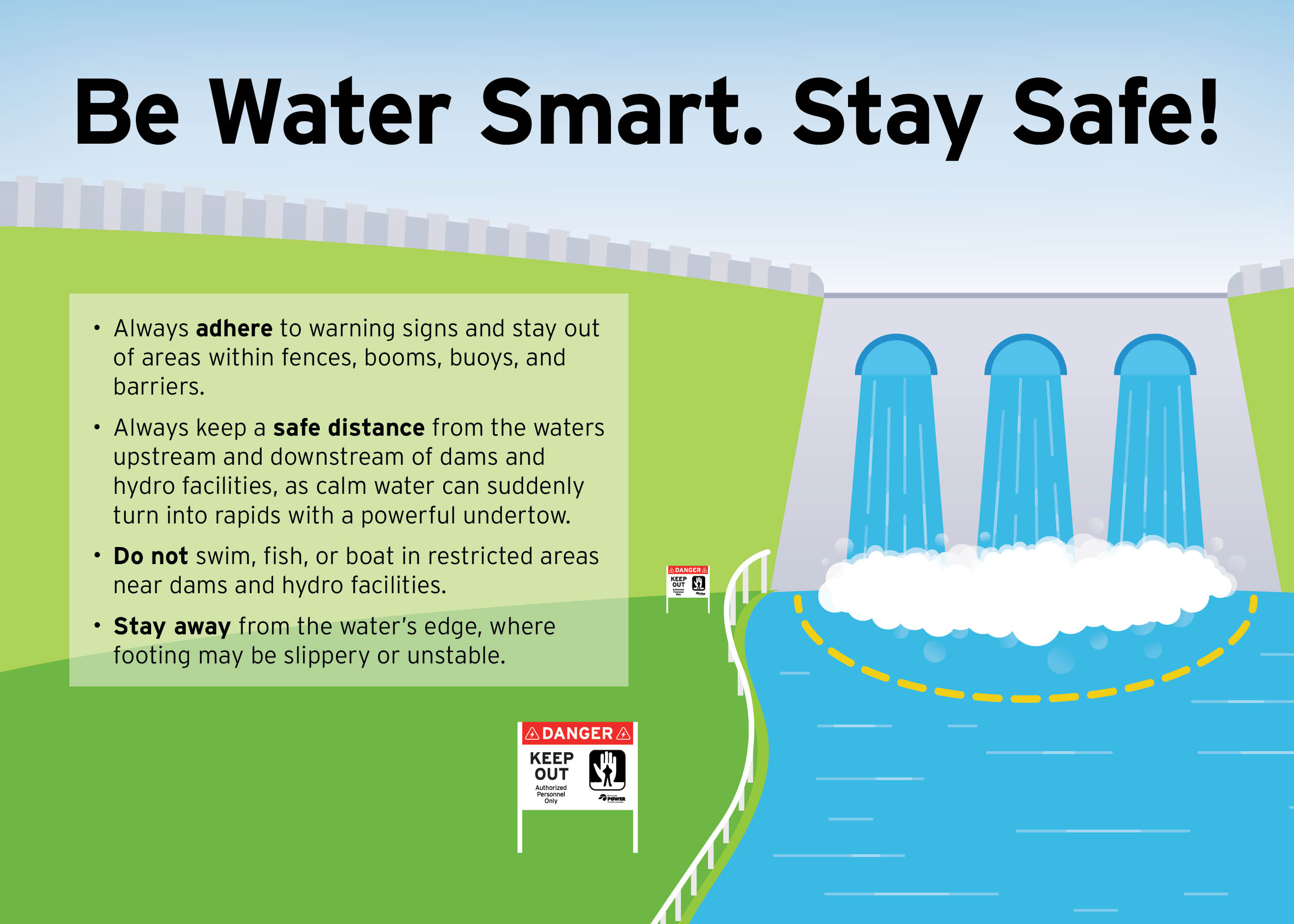
BE WATER SMART. STAY SAFE.
We operate 17 hydroelectric systems, 53 generators and approximately 155 dams on lakes and rivers around Nova Scotia to generate renewable electricity. One hydro system may contain several generators and many dams to create electricity.
Hydro safety tips
- Avoid upstream and downstream areas of dams and hydro systems.
- Exercise caution when fishing, boating, and swimming and stay away from dams.
- During the winter and spring months, beware of thin ice. The moving water around dams makes it very difficult for ice to form properly. Activities like snowmobiling, cross-country skiing and ice fishing can be very dangerous in these areas.
- Plan your trip ahead of time and identify any water hazards including dams. When your trail takes you across a waterway make sure you have a way back out in case of rising water levels.
- Respect warning signs, boom, buoys and barriers. They are there for your protection.
- Beware that calm water can suddenly turn into rapids with a powerful undertow. This can be especially dangerous in the spring due to high inflows from spring rains and snowmelt.
Tubing on the Gaspereau River
Our dams and other infrastructure – most of which dates back to the 1920s to 1940s – along the Black River system actually create the water levels that allow tubing downstream on the Gaspereau.
How much water we can flow down the Black River system, which feeds Gaspereau River, is regulated by our environmental permits. Those rules are in place to protect fish and fish habitats. Under our environmental permits, we have to run the system 24 hours a day from April 15 to June 15 to enable fish migration – because the river has populations of smelt, gaspereau, salmon, and bass. We want to keep them healthy. But running strong river flows 24/7 drains a lot of water from the system.
At the same time, our permits also require us to maintain a certain water level on Black River Lake between Victoria Day and Labour Day – so mid-May to early-September. That’s to maintain high enough water levels for cottages along the lake, as well as for the end of the bass nesting season.
Each summer, we reach a point where those two environmental requirements intersect – we’ve drained a lot of water maintaining flows for fish migration, and so we have to reduce the flows for a few weeks to keep the water levels up in Black River Lake for the cottages and bass.
FOR OUR METER READERS
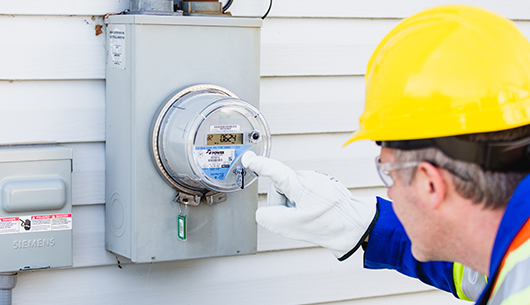
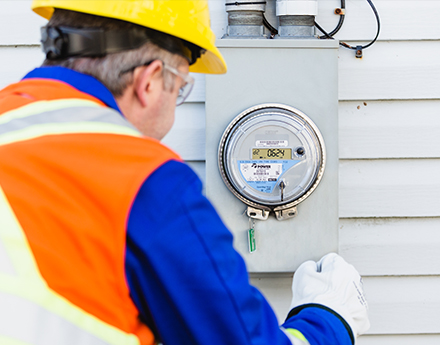
When meter readers can safely enter your property, it allows your power bill to be calculated based on actual household consumption rather than on an estimate.
 Tips before your visit
- Assess your property for potential hazards.
- Unlock your gates and clear pathways to your meter on the day of your scheduled visit.
- If you have a dog, please make certain it is properly leashed or kept in place that won’t interfere with the meter reader.
- When in doubt, give us a shout. If you’re unsure if something could pose a threat to our meter readers, ask us. It’s always better to be prepared for an event that doesn’t happen than to be caught off guard by one that does.
- Keep a safe and clear pathway.
- Be aware of the location of your meter. What might have been free and easy access when the meter was installed could now be hazardous.
- Keep the area around your meter clean and free of debris and obstacles.
- Remove brush, plants or shrubs that may be hazardous for your meter reader.
- Remove snow and ice from the access way to your meter
FOR YOUR SAFETY
- All meter readers wear a uniform bearing the Nova Scotia Power logo.
- All meter readers carry logoed Nova Scotia Power photo identification cards.
- If photo identification is not presented, do not admit individual onto your property or into your residence.
Protective Equipment Testing
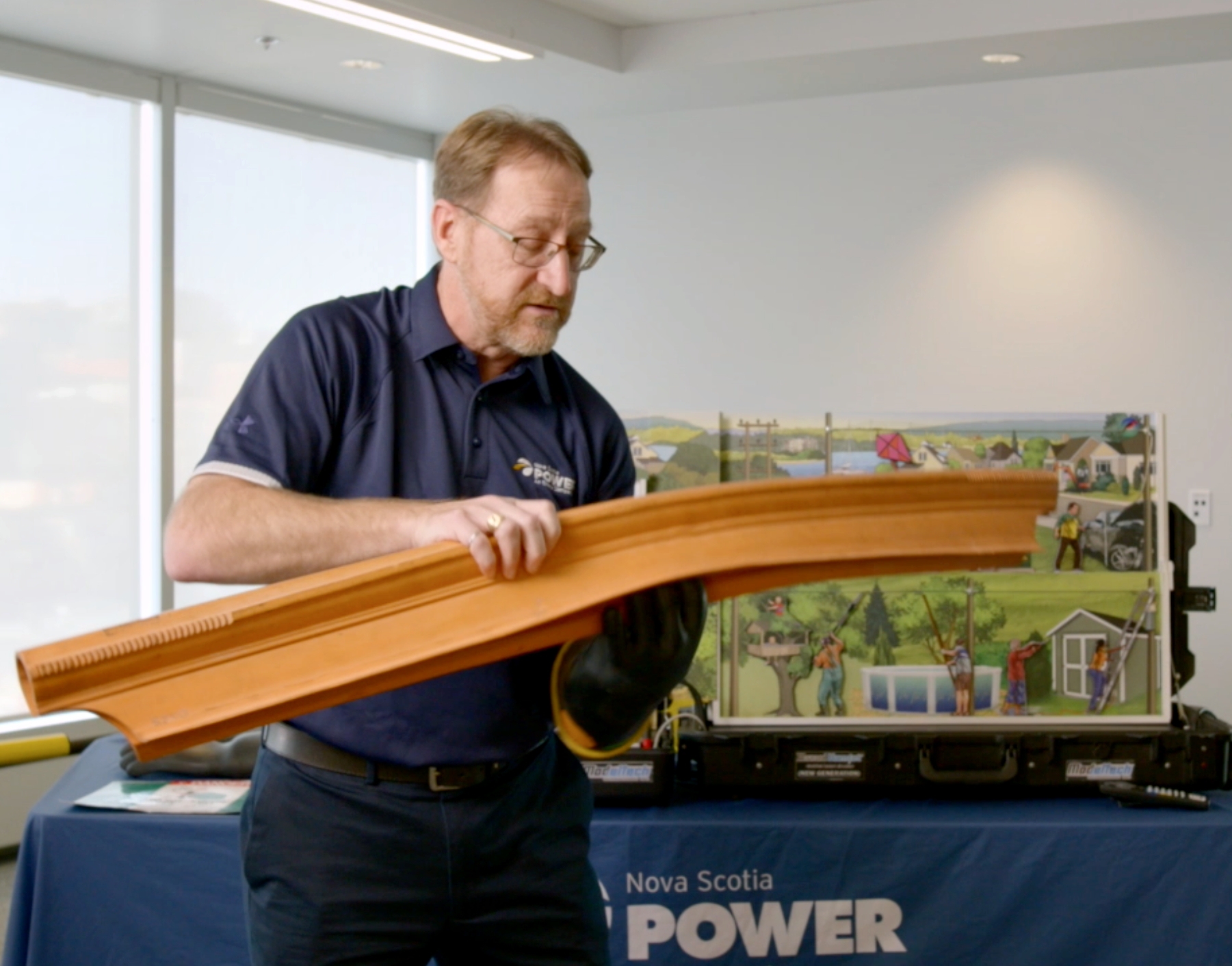
We're certified in testing your protective equipment. Currently, at Nova Scotia Power we test the following products for both Nova Scotia Power and external companies:
| WORK METHOD | REFERENCES |
|---|---|
| Aerial Devices and Jib Testing | ANSI - A92.2 |
| Bucket Liner Testing | ANSI - A92.2 |
| Jumper Cable Testing | F2321 |
| Line Hose and Cover Testing | D1049, D1050, F478 |
| Live Line Tools Testing | F711, F1825, F1826, IEEE-978 |
| Load Buster Testing | F711, F1825, F1826, IEEE-978 |
| Plastic Line Guard Testing | F712, F968 |
| Rubber Blanket Testing | D1048, F479, F1236 |
| Rubber Glove Testing | D120, F496, F1236 |
| Rubber Sleeve Testing | D1051, F496 |
| Testing of Hydraulic Tools on Fiberglass Reinforced Plastic (FRP) Sticks | F711, F1825, F1826, IEEE-978 |
| Ground Set Testing & Repair | F2249, F855 |
Grade 6 Electrical Safety Program
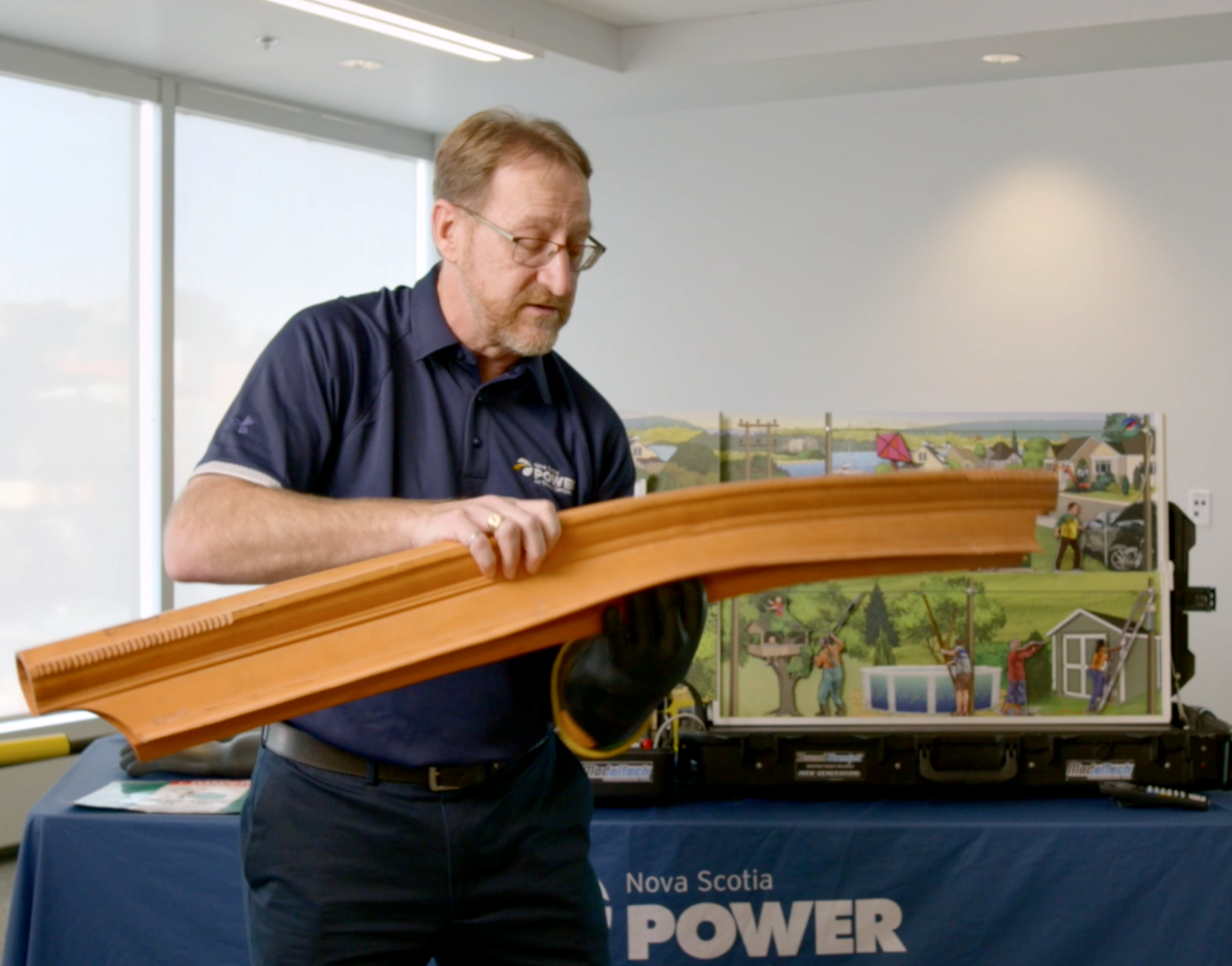 Educating children about electrical safety is important, which is why Nova Scotia Power teams up with elementary schools across the province every year to offer the Grade 6 Electrical Safety Program.
Through an hour-long presentation, students learn how to be safe around electricity through dynamic and interactive materials developed specifically for the Nova Scotia Grade 6 curriculum. Nova Scotia Power offers the program to schools throughout the province at no cost.
View Grade 6 Electrical Program >
Safety News & Stories

.jpeg?sfvrsn=7e3b3300_1 "IMG_2593 (1)")
Get to Know Adam, Protective Equipment Tester
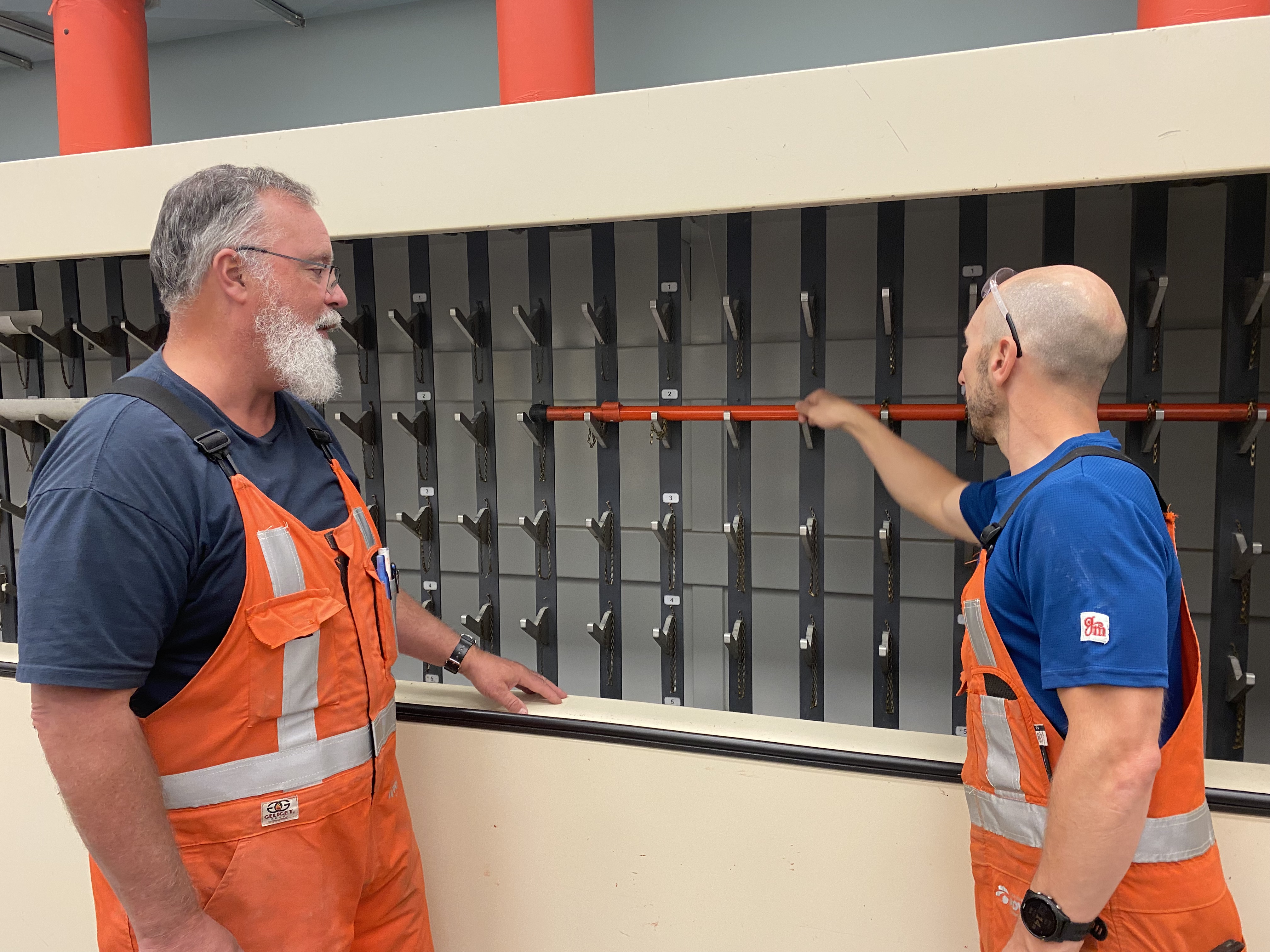
In the Spotlight: Safety Equipment Testing Centre

Get to know Kirk, Leading Protective Equipment Tester
Safe clearance reporting saves lives
Every year, Nova Scotians make dangerous contact with power lines. Whether you’re doing major commercial construction work or simple repairs to your home, ask yourself: will I come within six metres of a power line? If so, you need a Safe Clearance Report from Nova Scotia Power to safely carry out the job.