

Battery Storage
Get to know battery storage
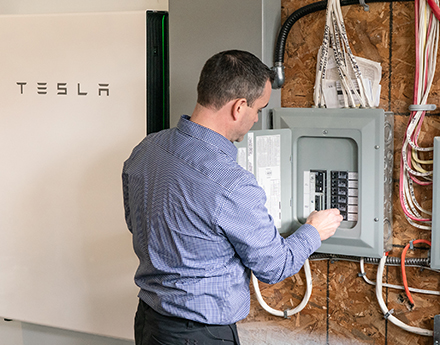
Home batteries connect to both the grid and your home through your electrical panel. They charge by drawing power from the grid—ideally at off-peak times or when there is excess clean energy available. In the event of an outage, a home battery system can power some essential items in your home, like your refrigerator that are configured for backup in a critical loads panel. A home battery system can detect a grid outage and automatically kick in.
Battery storage benefits

Back-up Power
In the event of an outage, the battery can keep some home necessities running.

Green Energy
Batteries provide an opportunity to store clean energy from wind and solar so you can access it when it is needed.


Did You Know?
Nova Scotia is one of the best places in North America to harness the power of wind. As both wind and solar are intermittent power sources, they require reliable energy storage. That’s where battery storage comes in.
Battery storage pilot programs
We’re already successfully testing battery storage at a community level with customers across the province. This test phase is helping us understand how batteries can allow us to store and use renewable energy more efficiently and it is demonstrating the reliability of this back-up energy technology.
.jpg?sfvrsn=6145239d_6)
Intelligent Feeder Project
In the community of Elmsdale, Nova Scotia Power worked with customers and industry leaders to examine how battery technology and microgrids can help us better serve our customers. Dubbed the “Intelligent Feeder Project,” this pilot project showed how batteries can help us use renewable energy more efficiently, while providing back-up power to customers during power outages.
Coming Soon
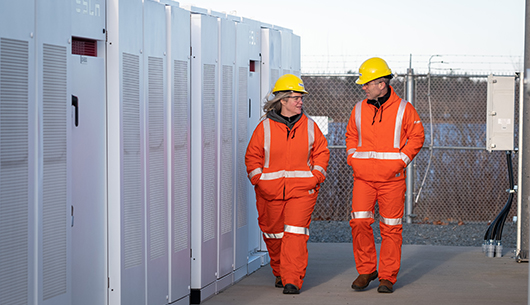
Smart Grid Nova Scotia
This pilot program is dedicated to investigating more innovative ways that battery storage can benefit both Nova Scotians’ homes and the power system as a whole. It’s based on efforts to lower power use during peak times, shift demand to off-peak times (like overnight), and transition to using more clean energy.
Learn more