


Types of EVs
Types of Electric Vehicles
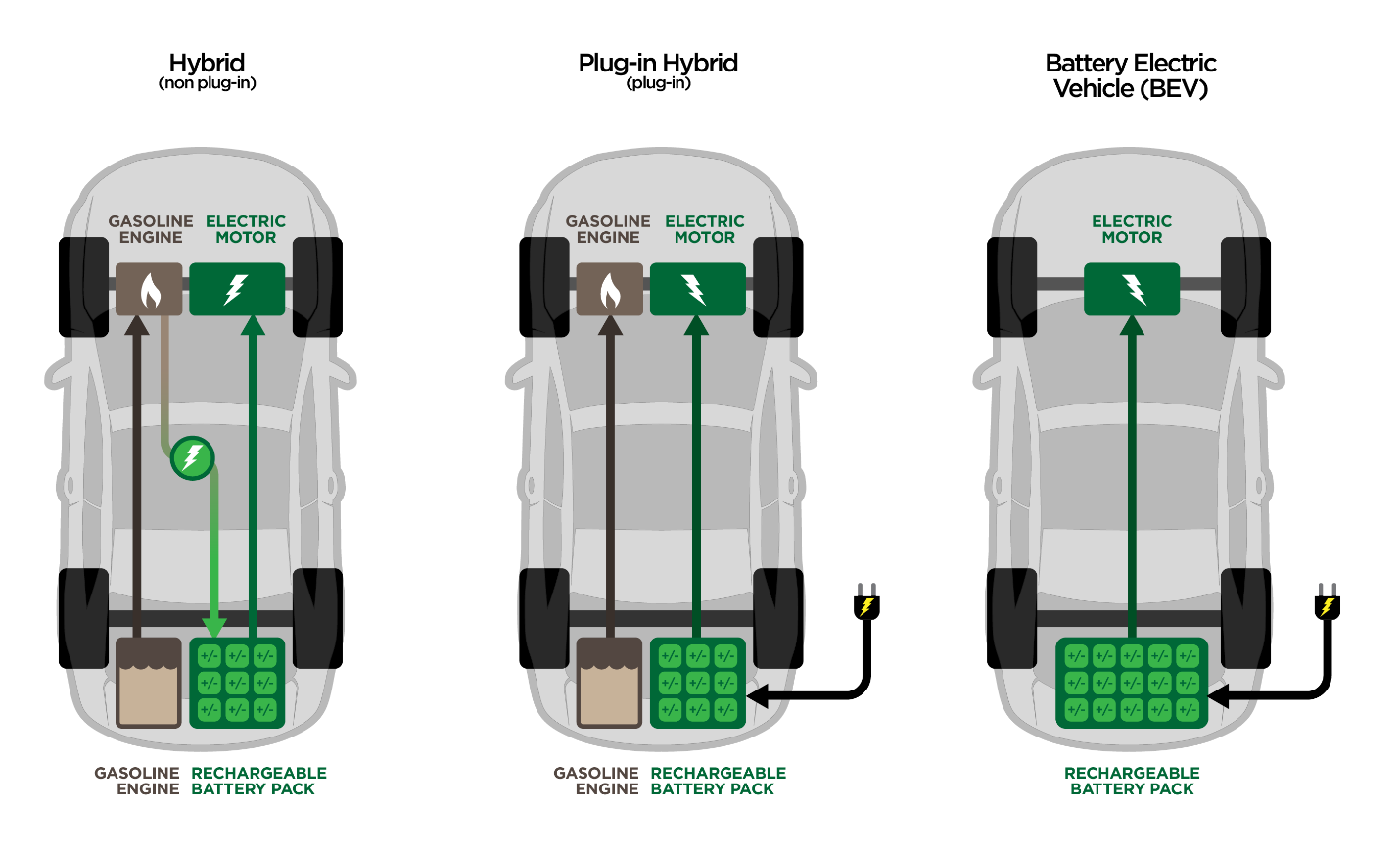
There are three types of EVs on the road today:
Hybrid
Non plug-in
The most common type of EV available today, hybrids rely on two drive systems to generate their own electricity to feed their batteries. Nearly every major manufacturer offers many different models of hybrids for customers to choose from.
Plug-in Hybrid (PHEV)
Plug-in
A PHEV has both a rechargeable battery pack and a gasoline engine, and if the battery pack is depleted, the gasoline engine takes over.
Battery Electric Vehicle (BEV)
Battery
BEVs are powered only by a rechargeable battery pack, nothing else. Without any gasoline, they generate zero emissions.
While you can always simply plug your EV into any grounded exterior outlet, there are lots of easy ways to quickly charge your EV in Nova Scotia.

LEVEL 1 (120 Volts/15 Amps)
Portable and standard wall outlets
Best for charging your EV overnight at your home or in a garage. Less than 13 hours.

LEVEL 2 (240 Volts/30 Amps)
On-board charging station
The most common charging station for EVs, easy to install in a garage or driveway. 3-8 hours.

LEVEL 3 (480 Volts/100 Amps) - DC quick chargers
High-powered charging station
Super charged DC outlets in stations around Nova Scotia will charge your EV in just minutes. 15-30 minutes.
Energy Products
Switching to electric-based solutions can help you save money, use less energy and be more comfortable, while lowering your carbon emissions. Discover all the different products that can make a difference for you and your family.